We want to help you understand important aspects of your health, and one of the most important numbers to know is your blood pressure.
High blood pressure, or hypertension, often has no symptoms, which is why regular monitoring is recommended. But what do those numbers mean, and when should you be concerned? We have some explanations for you.
Blood Pressure Explained
Think of your heart as a pump and your arteries as hoses. Blood pressure is the force of the blood pushing against the walls of your arteries as your heart pumps it around your body.
When you get your reading, you’ll see two numbers:
- Systolic Pressure (The Top Number): This measures the pressure in your arteries when your heart beats (contracts).
- Diastolic Pressure (The Bottom Number): This measures the pressure in your arteries when your heart is resting between beats.
Both numbers are important for determining your overall blood pressure category.
Understanding the Categories
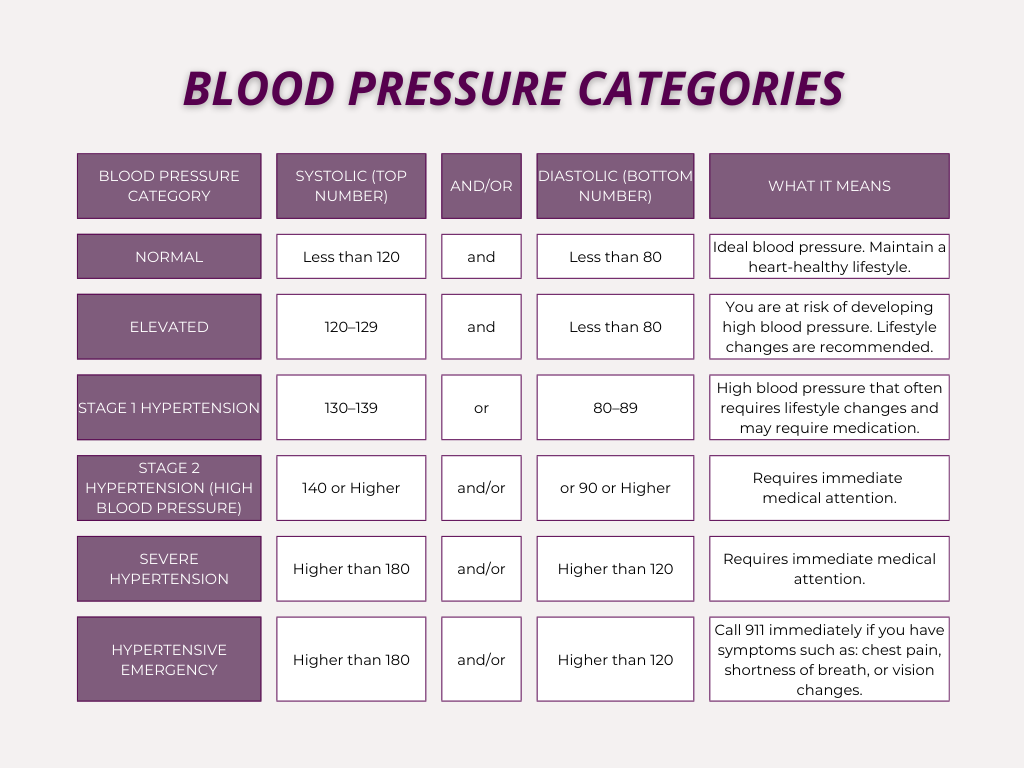
The American Heart Association (AHA) and other health organizations have established categories to help you understand your blood pressure reading. Based on the chart you see below; this is what those numbers mean:
When to Get Help: Severe & Emergency Situations
While Stage 1 and Stage 2 high blood pressure should be managed with your healthcare provider, two categories require prompt action:
- Severe Hypertension (Higher than 180 and/or Higher than 120): If you take a reading this high, you need to call your provider right away, even if you have no symptoms. This level puts a high strain on your heart and organs.
- Hypertensive Emergency (Higher than 180 and/or Higher than 120 WITH Symptoms): If your blood pressure is this high AND you have any of the following symptoms, call 911 immediately:
- Chest pain or shortness of breath
- Back pain
- Numbness, weakness, or difficulty speaking
- Change in vision
What Can You Do Next?
The best step you can take for your heart health is to know your numbers.
- Get Checked Regularly: Ask your healthcare provider to check your blood pressure at every visit.
- Monitor at Home: A home blood pressure monitor can be very helpful. Bring your device to your next visit so your provider can confirm it gives accurate readings.
- Focus on Healthy Habits and Lifestyle: Maintaining a healthy weight, eating a diet low in sodium, exercising regularly, and avoiding tobacco are all powerful ways to keep your blood pressure in the Normal range.
Stay Proactive With Wellness Screenings
CCMH offers quarterly Wellness Screenings for just $45. These screenings include a complete blood count, a lipid panel, and a comprehensive metabolic panel.
This is an excellent way to stay on top of your health through early detection, prevention of chronic diseases, and improved overall well-being. By catching potential problems early, you increase your chances for successful treatment and a higher quality of life.
We’re Here to Help
If you have any questions about your blood pressure readings or would like to schedule an appointment with your provider, please contact us today by calling 712-265-2700.