
Overview
Sleep Studies
Crawford County Memorial Hospital has provided comprehensive sleep studies for nearly a decade, offering patients a comfortable, clinically supervised environment for overnight testing. Sleep studies are conducted during a one-night stay in private rooms designed to feel like a bedroom, complete with a queen-sized bed, television, carpeted floors, and a private bathroom. A physician referral is required.
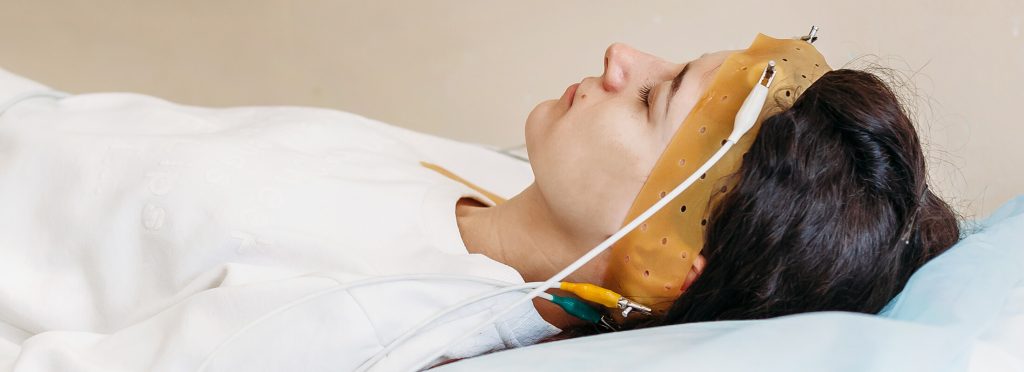
Patients typically arrive around 8:00 p.m., with testing completed by approximately 6:00 a.m. or earlier. During the study, a trained sleep technician applies sensors that monitor brain waves and sleep stages, breathing patterns, heart activity, oxygen levels, eye movement, respiratory effort, and leg movement. Patients are able to move freely and may get out of bed to use the restroom as needed.
Throughout the night, patients are continuously monitored by a technician using cameras, microphones, and real-time data from the monitoring equipment. Once the study is complete, results are thoroughly analyzed and reviewed by Dr. Scott Eveloff, a board-certified sleep medicine specialist with extensive experience in sleep apnea and obstructive lung disease. Final results are then sent to the ordering physician. Sleep studies are commonly ordered to diagnose conditions such as sleep apnea and guide appropriate treatment.
To learn more about the Cardiopulmonary services offered at CCMH, call 712.265.2667.

Commitment to Excellence
The Crawford County Memorial Hospital’s Sleep Study is accredited by Accreditation Commission for Health Care (ACHC) for compliance with a comprehensive set of national standards. By choosing a healthcare provider that has achieved ACHC accreditation, you can take comfort in knowing that you will receive the highest quality care.
What is Sleep Apnea?
Sleep apnea is very common – in fact more than 18 million American adults suffer from it. Apnea is a term that is used to describe a condition when people stop breathing. When a person has sleep apnea, the airway becomes blocked repeatedly during their sleep. Their breathing temporarily stops.
Signs of Sleep Apnea
- Loud snoring
- Person alternates between snoring very loudly and being very quiet
- Observed pauses in breathing during sleep
- Excessive sleepiness
- He/she may fall asleep while watching TV or reading, attending
- meetings or driving
- Person may wake up tired, even after a full night of sleep
- Morning headaches
- Trouble concentrating or forgetfulness
- Frequent nighttime awakenings and urination
- Irritability / short temper / lack of energy / depression or other mood changes
- Restlessness at night – sufferer may toss and turn a lot
- Dry mouth
Causes of Sleep Apnea
Sleep apnea occurs when the muscles in the back of the throat fail to keep the airway open despite your efforts to breathe. Even though this seems like a simple problem, it can cause other bigger health concerns. In addition to interrupting sleep, the pauses in breathing can cause blood oxygen levels to drop and can cause changes in heart rate, and blood pressure. These occurrences can increase your risk of high blood pressure, heart attack and stroke.
Treatments
If the study shows you do have sleep apnea, there are several treatment options. The most common one is a c-pap – continuous positive airway pressure. This treatment involves wearing a mask that supplies a continuous pressure through the nose during sleep. The mask helps prevent airway restriction or collapse. This can bring an end to snoring, gasping and interrupted sleep.
In addition, losing weight, sleeping on your side, and eliminating the use of alcohol and tobacco can decrease the severity of sleep apnea.
STOP BANG
Self Screening
-
Snoring
Do you snore loud enough to be heard through a closed door?
-
Tiredness
Do you have excessive daytime sleepiness or feel tired when waking?
-
Observed
Have you been told you stop breathing at night or gag?
-
Pressure
Are you taking medication for high blood pressure?
-
Body Mass Index
Do you have a BMI more than 35 kg/m2?
-
Age
Are you over 50 years of age?
-
Neck
Is your neck circumference greater than 16 inches (40 cm)?
-
Gender
Are you male?
If you answered “Yes” to 5 to 8 of these questions, you are at high risk of suffering from sleep apnea.
If you answered “Yes” to 3 or 4 of these questions, you are at intermediate risk of sleep apnea.
If you answered “Yes” to 0 to 2 of these questions, you are at low risk for sleep apnea.