Guest-written by Tammy Hulsing, MS, CCC-SLP, Speech-Language Pathologist at CCMH Rehab Services
Communication starts long before a child speaks their first word. Eye contact, facial expressions, and gestures are all early forms of communication. Learning to communicate requires joint attention, turn-taking, and imitation.
Listed below are typical communication milestones by age. If your child is not doing these yet, talk to your doctor about seeing a speech-language pathologist to determine if therapy may be appropriate.
Infants
Infants may begin showing early communication skills by:
- Looking for you when you call their name
- Noticing and looking at a person when they come near
- Imitating your smile or other facial expressions when you are talking to them
- Trying to make sounds when you are talking to them
18 Months to 2 Years Old
Children between 18 months and 2 years old may begin to:
- Use gestures to communicate, such as putting their hands up to be picked up, pointing to things they find interesting, waving hi or bye, bringing items to show you, or pulling your hand toward what they want or to get you to play with them
- Babble or use single words to ask for things or name things
- Use the word “no” often
- Follow simple directions, such as bringing items you ask for or giving an item to another person
- Look at things they hear you talking about
- Play with a variety of toys
- Want you to play games they enjoy, such as tickling, swinging, peek-a-boo, or chasing
3 Years Old
By age 3, children may begin to:
- Use 2- to 3-word phrases to respond to questions, ask for things, ask a question, or tell you about things they see
- Follow longer directions, such as “get your coat and shoes” or “pick up the toys and put them in the box”
- Enjoy looking at books and labeling or pointing to pictures, and sometimes listen while you read the words
- Play in more complex ways or imitate things they see other children or their parents do
- Make choices and answer yes/no questions
- Use many sounds in words that they may not say correctly yet, while still being understood at least 50% of the time
When to Talk to Your Doctor
If you have any concerns about your child’s speech and language development, talk to your doctor and ask about seeing a speech therapist.
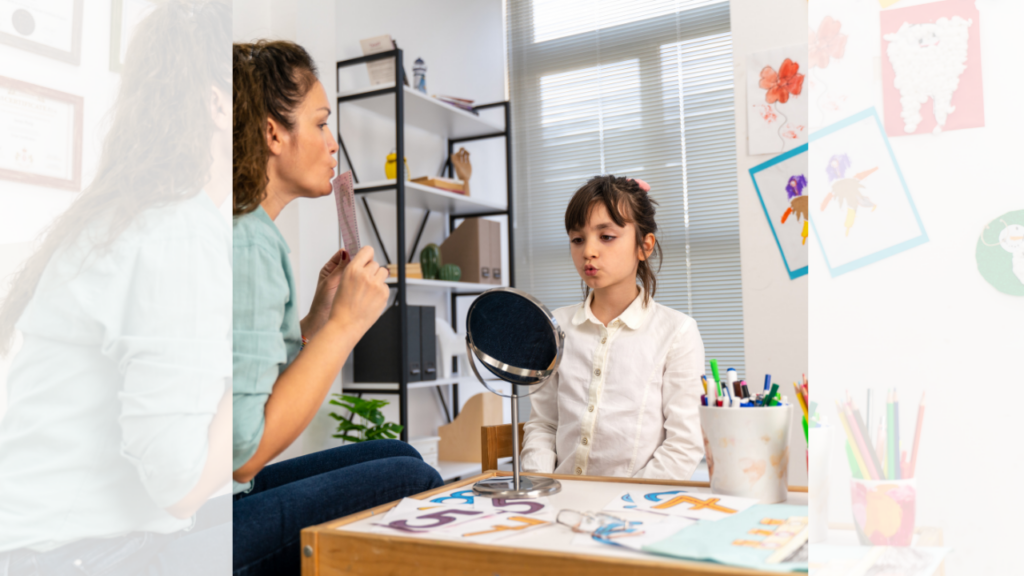
A speech-language pathologist will gather information from you about your child’s medical and developmental history, as well as how your child communicates with you and others at home. They will use toys and play-based activities to assess your child’s communication skills.
The speech therapist will provide information on how your child’s communication skills compare to other children their age, as well as education and suggestions for how you can help your child continue developing communication skills.