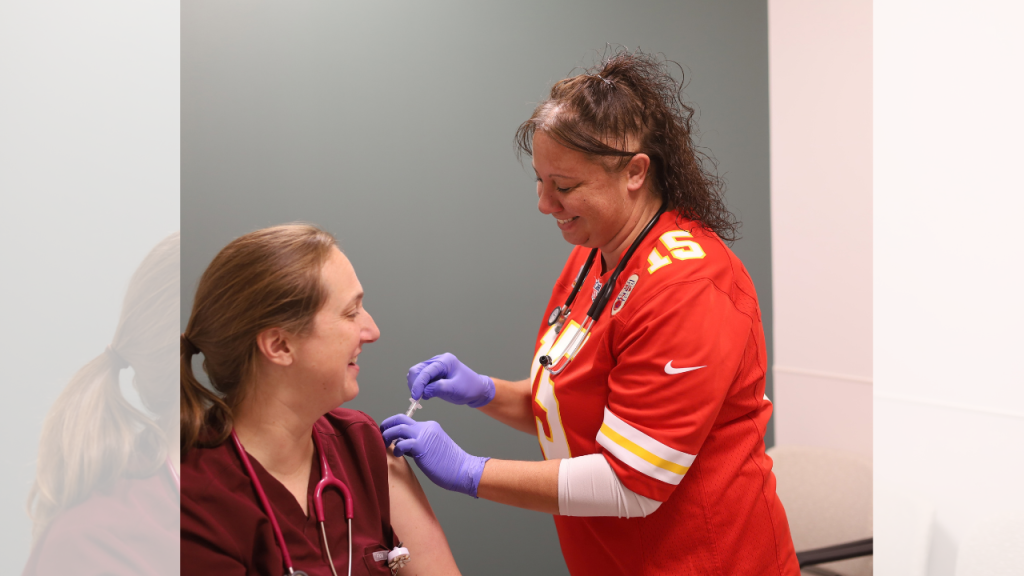
As fall arrives, it’s a good time to start thinking about protecting yourself and your family from the flu.
The flu can spread quickly and leave you feeling miserable for days or even weeks. While no one wants to get sick, getting your annual flu shot is one simple step you can take to help protect yourself and those around you.
The flu is more than just a bad cold
Influenza, commonly called the flu, is a contagious respiratory illness caused by influenza viruses. It can cause:
- Fever or chills
- Cough
- Sore throat
- Runny or stuffy nose
- Headaches
- Body aches
- Tiredness
Every flu season is different, and the flu can affect people differently. During typical flu seasons, millions of people get the flu, hundreds of thousands are hospitalized, and thousands to tens of thousands of people die from flu-related causes.
For some people, the flu may mean a few miserable days at home and missed work, school, or family activities. For others, it can lead to serious illness, hospitalization or other complications.
Who is most at risk?
Anyone can get the flu, but it can be particularly dangerous for certain people, including:
- Adults 65 and older
- Pregnant women
- Young children
- People with chronic health conditions such as asthma, diabetes or heart disease
- People with weakened immune systems
If you or someone you love falls into one of these groups, getting vaccinated is especially important.
What does the flu vaccine do?
The flu vaccine helps your immune system recognize and fight influenza viruses. The vaccine doesn’t prevent every flu infection, but it can help reduce your risk of serious illness and other complications.
For older adults and others at higher risk, vaccination can help reduce the chance of hospitalization from the flu.
Think of the flu vaccine as an important layer of protection. It may not prevent every infection, but it can help lower the risk of the flu becoming something more serious.
Why do I need a flu shot every year?
You may wonder why you need another flu shot if you received one last year. There are two important reasons.
First, your immune protection from the flu vaccine can decline, so getting vaccinated each year helps provide the best protection for the upcoming flu season.
Second, flu viruses are constantly changing. Each year, health experts review the influenza viruses that are circulating and update flu vaccines to help protect against the strains research indicates are most likely to be common during the upcoming flu season.
Why getting the vaccination matters
Getting your flu shot isn’t only about avoiding a few days of feeling sick. For some people, the flu can become much more serious.
A flu vaccination can help lower the risk of serious complications and hospitalization. It can also help protect people around you who may be more vulnerable to severe illness.
You may spend time with a grandparent, young child, pregnant family member, or someone living with a chronic health condition. By getting vaccinated, you can help reduce the chance of spreading the flu to people who may be more likely to become seriously ill.
Other ways to help prevent the spread of flu
A flu shot is an important part of protecting yourself during flu season, but it isn’t the only step you can take.
Remember to:
- Wash your hands regularly with soap and water.
- Cover coughs and sneezes.
- Avoid close contact with people who are sick.
- Stay home when you’re feeling ill.
- Get plenty of rest and take care of your overall health.
Flu shots are available at CCMH Medical Clinic
If you haven’t received your flu shot yet, now is a good time to get protected.
Flu shots are available at CCMH Medical Clinic. If you have questions about the flu vaccine or whether it is right for you, talk with your healthcare provider.
Don’t wait until flu season is in full swing. Take a simple step today to help protect yourself and your family.
Schedule your flu shot by calling 712-265-2700 or request an appointment by visiting ccmhia.com/request-an-appointment/.